Stateless vs Persistent Agent Design Tradeoffs
Stateless agents scale easily but can't sustain multi-turn tasks without exploding token costs.
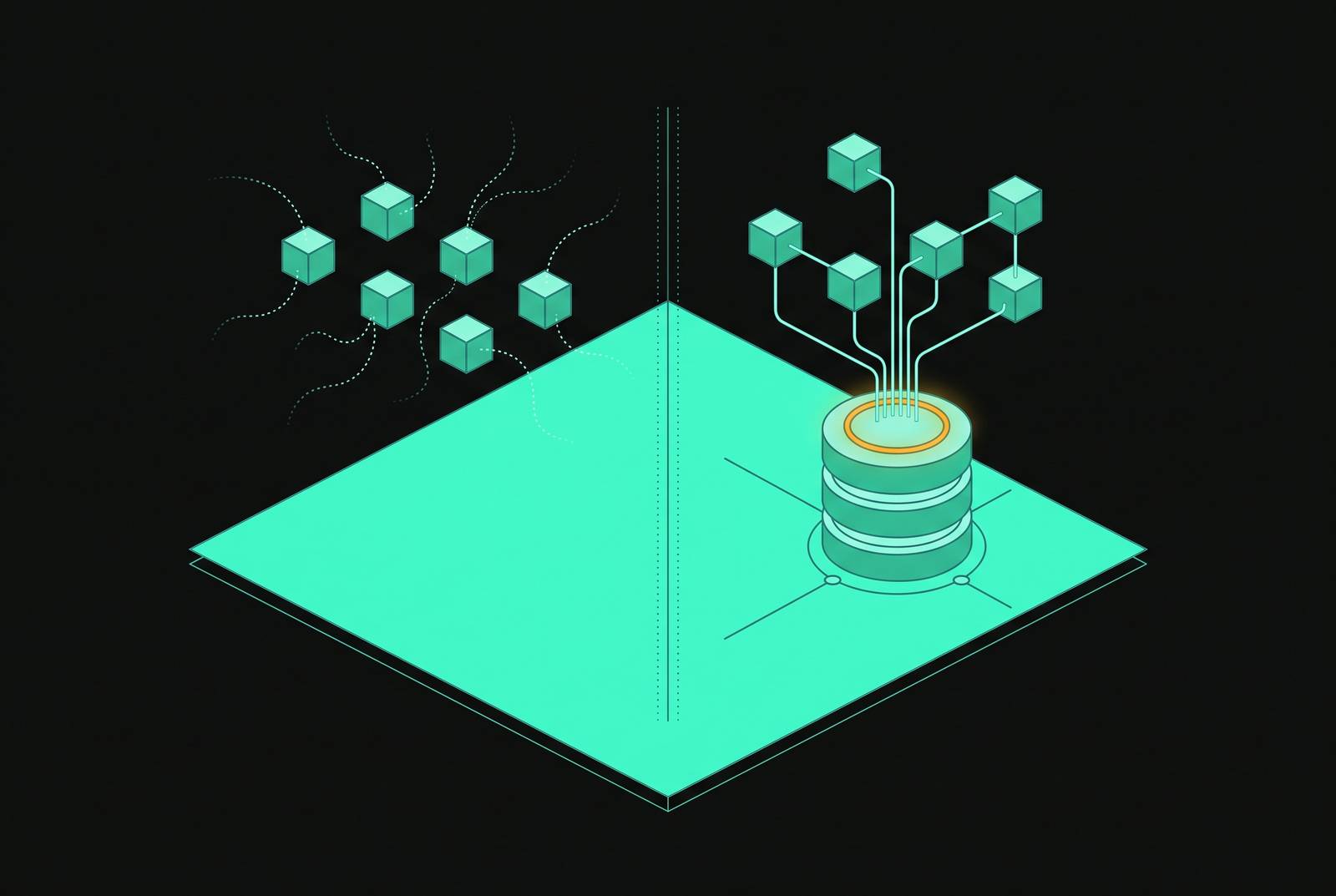
The decision to build an agent as stateless or stateful is not a configuration flag you flip later. It determines what workflows the agent can sustain, how it scales under load, and what infrastructure it needs from day one. Large language models are stateless by design: every call starts from zero, with no memory of anything that happened before it. Keeping such an agent on track over a six-month deployment is incredibly hard. Developers noticed this early and reached for the obvious patch, stuffing entire conversation histories into the context window, but that patch breaks down as latency climbs and the model's attention degrades on facts buried deep in a long prompt. The more durable fix isn't a bigger window at all; it's treating memory and state as deliberate architectural decisions made up front, not afterthoughts bolted on once something breaks. Two agents running the identical underlying model can behave in completely different ways in production, and the reason nearly always traces back to the orchestration layer sitting above the model. The practical difference between the two camps is straightforward: stateless agents start fresh each run, which keeps them simple and easy to scale, while stateful agents persist memory across steps and sessions to sustain hours-long tasks, paying state-management overhead for it.
The meanings of state and memory, and the distinct failure modes caused by conflating them
State is a snapshot: everything the agent currently knows about a task right now (what step it's on, what the last tool call returned, what variables it's tracking). Picture a whiteboard that gets erased when the session ends unless someone deliberately copies it down first. Memory, by contrast, is the mechanism that carries information across a boundary: the next conversational turn, the next login a week later, or a separate agent picking up the thread.
MachineLearningMastery describes the cycle they form as follows: at the start of a task, the agent reads from memory to build initial state; during the task, state updates continuously; and at task conclusion, select pieces of state are written back to memory for the next session. Runtime state, as JetBrains frames it, is the temporary record of the current run, which steps finished, what came back, what's left, and it's discarded the moment the workflow ends. Break state and the agent loses track of what it's doing mid-task. Break memory and the agent can't learn or personalize at all, treating every single interaction as a total blank slate. Those are not the same bug, and patching one won't touch the other.
The delivery and structural limits of stateless agents
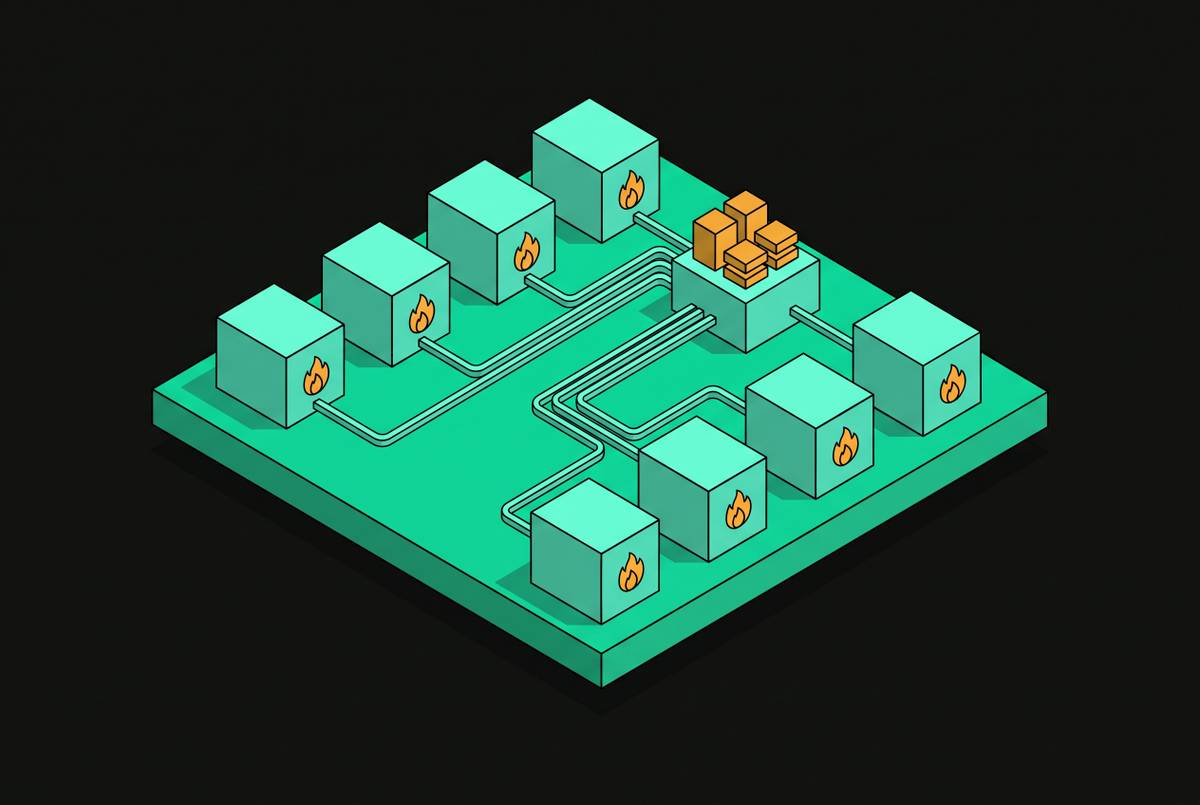
Stateless agents earn their popularity honestly. A stateless agent receives input, builds a prompt, calls the model, and returns a response, with nothing saved anywhere afterward. Because no user memory sits on a backend server, incoming requests can be routed to any available instance. Stateless agents scale horizontally behind ordinary load balancers with none of the coordination overhead that sticky sessions demand. For classification tasks, one-shot question answering, or explaining a block of code, that architecture is not just sufficient, it's the right call, since continuity across turns simply isn't part of the job. Stateless agents are especially favored in simple pipelines oriented to very specific tasks, like text extraction.
The ceiling appears the moment a task needs more than one turn to finish. Since the backend keeps nothing, the frontend has to re-send the entire conversation history with every new request, and that history grows with a snowballing effect: each turn adds to what the next one must carry, driving up both token usage and latency in a way that compounds rather than stays flat. Given that agentic tasks already run token-intensive by nature, this snowballing effect turns token cost into one of the largest line items in operating an agent at scale. Not every account frames this the same way: a Tacnode post from 2026-01-06 describes the same re-sending behavior as a developer workaround and characterizes the resulting token-cost growth as linear rather than snowballing. In a simulated multi-turn exchange documented as a test, an agent was asked what its name was and what it had been learning about, a question that referenced an answer given earlier in the same conversation. Without the client re-sending that earlier history, the agent had nothing to draw on, and the request failed. That's a structural gap baked into statelessness itself. It's what statelessness guarantees the moment a workflow needs to remember anything past the current request.
Capabilities enabled by stateful agents and their production failure modes
Stateful agents flip the model. Rather than reconstructing everything from a client-supplied transcript, a stateful agent loads prior state for a given key (user_id, session_id, workflow_id), uses that state to inform its current response, then persists updated state for future use. That single change unlocks a cluster of capabilities that stateless design structurally cannot offer: persistent identity across sessions, the ability to form real memories out of past interactions, responses that adapt to a specific user, recall of decisions made earlier, and the ability to resume cleanly after a failure instead of starting over. It also inverts the cost curve from the previous section: because context lives externally rather than getting resent in full with every call, stateful agents actually use fewer tokens per request over a long-running task. Multi-step workflows, assistants that need to feel personalized, systems that must survive a crash and pick back up, none of these function acceptably without state.
None of that comes free, and the failure modes here are meaner than stateless failures because they're quiet. Production stateful systems run into stale state left behind by parallel overwrites, updates that only partially complete, race conditions between concurrent processes touching the same record, prompt drift as accumulated context slowly pulls behavior away from its original intent, and state that simply vanishes across a retry. Resumption carries its own trap: exactly-once execution is not something you get by default, so if a node sent an email or wrote a database row before crashing, it may do that exact thing again when the workflow resumes, unless every side-effecting action was built to be idempotent from the start. Persistent memory also widens the attack surface in ways a stateless system never has to worry about. A 2026 survey in Frontiers in Computer Science documented real incidents where stored memory was pulled out through prompt injection, poisoned tools, or hijacked sessions, and the blunt truth is that an agent with nothing to remember has nothing there to steal. If a user mentions using Postgres in one session and migrating to Snowflake in a later one, the semantic memory layer has to actively resolve that contradiction, and absent resolution logic, the agent will just as happily serve up the stale answer as the current one.
The five architectural patterns that implement persistent memory and state in practice
Persistent memory and state aren't a single feature to switch on. They break down into at least five distinct patterns, each built for a different time horizon and a different failure mode, and picking the wrong one for a given need reliably reproduces the exact failures described above. Pattern 2 is execution checkpointing, aimed at fault tolerance and pausing. Two of the five address state, two address memory, and the fifth constrains both.
Pattern one is the in-context working buffer, the short-term execution layer holding the active prompt, recent turns, and live tool output for whatever's happening right now. It behaves like a sliding window: as it fills toward the token limit, older turns get compressed into a dense summary, and once the task ends the buffer flushes, keeping anything worth persisting and discarding the rest. Rewriting the prompt prefix mid-conversation to fit a summary in invalidates the KV cache, raising a latency spike on the very next call. Every agent needs this pattern in some form; it's the baseline for reasoning across more than one step within a single session.
Graph-based frameworks model workflows as nodes and edges, and after each step the framework persists state, including variables, history, and current position, to a durable store such as PostgreSQL or SQLite. This is what lets a long-running task resume exactly where it stopped instead of re-running finished work, and it's essential for anything involving human approval or a regulated process that has to survive a network outage.
Pattern three is semantic memory, which carries facts, preferences, and domain knowledge across sessions that have no other connection to each other. Facts get extracted asynchronously into an external store, usually a vector database with metadata filtering, and retrieved at query time to get injected into the prompt before the model sees it. That extraction step isn't free: it typically costs at least one additional LLM call, often once per turn.
Pattern four is episodic memory, which spans sessions the way semantic memory does but tracks what happened rather than what's known, letting an agent recall a past interaction as a discrete episode rather than a fact sheet.
Pattern 5 is the constraint and guardrail layer.
The hybrid architecture, stateless frontends with stateful orchestrators, as the production default
None of the preceding sections resolve into a clean either-or, and production systems have largely stopped treating it as one. The pattern that wins in practice puts a stateless frontend in front of a stateful orchestrator, capturing the horizontal scaling that stateless design offers at the request layer while still giving the system real continuity. Most systems that work reliably in production use a fixed control flow as the skeleton and let the model make decisions only within bounded steps, landing somewhere between fully scripted and fully autonomous rather than committing to either extreme.
Orchestration coordinates reasoning, tool calls, retries, human approvals, and the transitions between states, turning all of this into an actual workflow, and it owns the control flow that keeps all of it coherent. A useful signal on how seriously the industry takes the stateless side of this split showed up in MCP's specification update: as of 2026-07-28, the protocol removed the initialize/initialized handshake and the logical Mcp-Session-Id header entirely, making every request self-describing and independent, with protocol version and client capabilities traveling inline on every request. That's a deliberate bet on statelessness at the transport layer, made without any concession on statefulness in the agent logic running above it. Governance pressure points the same direction: a Gartner analysis cited by Mastra projects that by 2027, a substantial share of enterprises will pull back or shut down autonomous agents after governance gaps surface in production, and the hybrid pattern, with its fixed control flow and bounded autonomy, is a direct response to that risk. The practical rule that keeps recurring across practitioners: start stateless, and only add stateful orchestration once the workflow genuinely needs continuity beyond what a single context window can hold.
The infrastructure layer's role in determining whether stateful design is viable
Stateful agent design depends on the execution environment underneath the patterns above actually being able to hold up its end. Stateful agent design depends on isolation between concurrent workloads, persistence that survives restarts, and fast recovery when a process wakes back up, and without all three, the architectural commitments made at the design stage simply can't be honored once the system is under real load. The threat model changes what isolation even means here: a text-only agent answering questions can run safely in a fairly ordinary container, but an agent that executes code, touches the filesystem, or calls out to live tools carries a much bigger blast radius if something goes wrong, and the infrastructure underneath it has to be chosen with that difference in mind rather than treated as an afterthought once the architecture is already locked in.
Sources
- 5 Architectural Patterns for Persistent Memory and State in AI Agents - MachineLearningMastery.com
- AI Agent Architecture: Patterns and Production Design | Mastra Articles
- Stateful vs. Stateless Agent Design: Tradeoffs for Scalable Agentic Systems - MachineLearningMastery.com
- AI Agent Architecture Explained
- Stateful vs Stateless AI Agents: A Practical Comparison | Tacnode Blog
- Stateful Governance for Concurrent Agentic Systems