The Operational Cost of Stitching Serverless Invocations Into a Fake Persistent Agent
Rebuilding state between serverless invocations costs more than the cold starts themselves.
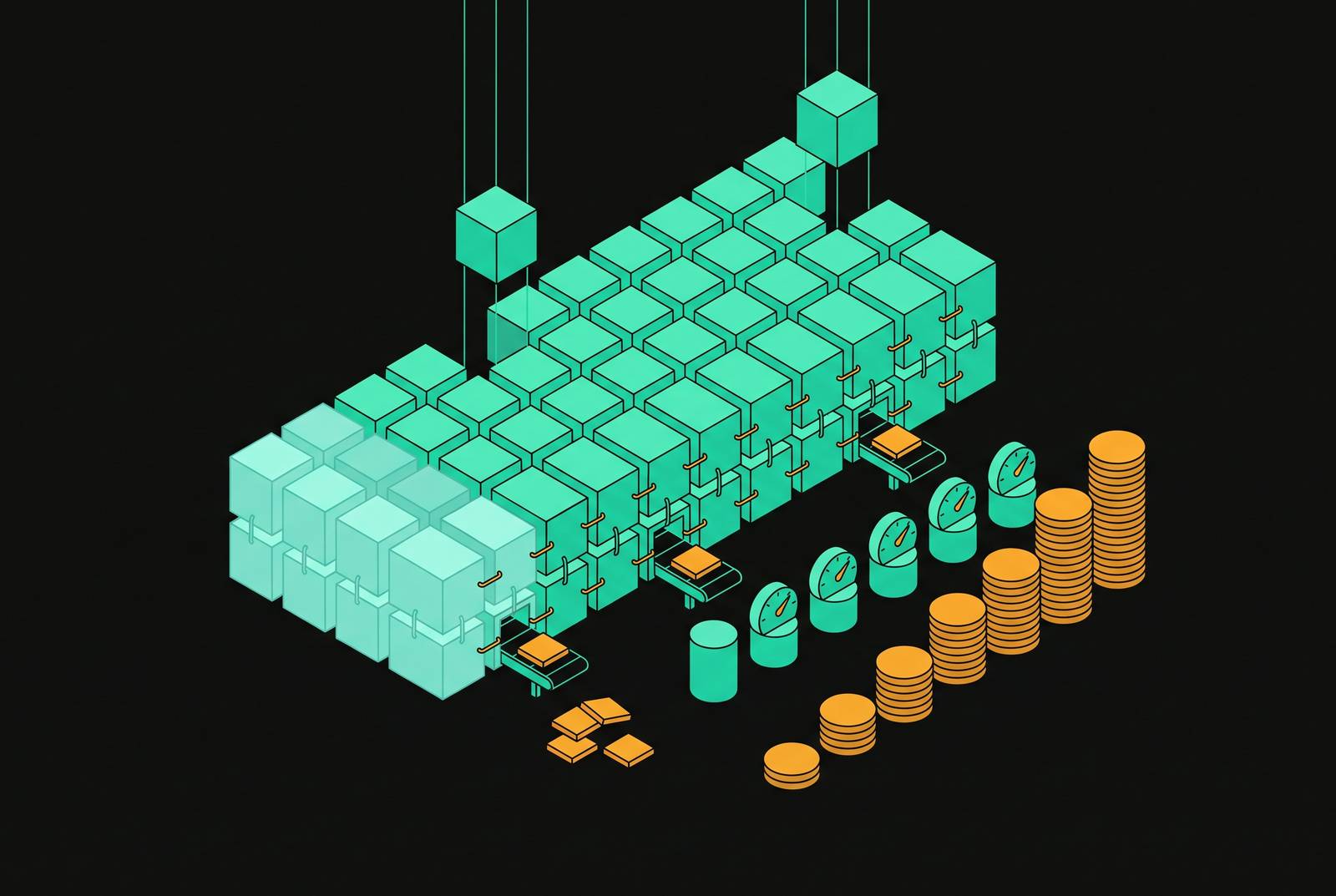
Persistent AI agent infrastructure preserves a working environment across turns, while stateless serverless functions require developers to rebuild it. Stitching those functions into a persistent agent creates recurring costs in initialization, state reconstruction, coordination code, and model tokens. The operational cost grows with the agent’s capabilities, because longer sessions and larger toolsets repeatedly expose the mismatch.
Why serverless functions and persistent agents are structurally incompatible
A serverless function treats an invocation as an atomic unit of work, with input arriving and output leaving. A persistent agent requires continuity between those units. Its workspace accumulates files, credentials, session memory, and context across many turns. The execution contracts of serverless functions and persistent agents are therefore incompatible. An invocation can run an agent step without keeping the environment that lets each step carry on the same task.
Developers bridge that gap by serializing state before an invocation ends and retrieving it when the next begins. Memory becomes an application responsibility. The resulting loop reads state, reconstructs context, runs the agent, serializes changes, and writes them back. This loop wraps each turn with work needed only to connect it to the last. It is the recurring base on which the other operational costs accumulate.
What cold starts actually cost an AI agent invocation, versus a standard function
A thin Python Lambda has a cold start of roughly 250ms, while the supplied cold-start breakdown for an AI dependency stack puts initialization at 3–8 seconds. Imports including the Anthropic Python SDK, OpenAI client, and boto3 bring dependency trees, connection pool setup, and TLS handshaking into the startup path. Before the agent can begin useful work, its environment must become ready to communicate with the services that perform that work.
Initializing clients inside the handler repeats setup that module-scope initialization can preserve for warm invocations. Cold invocations still pay the startup cost. For agents running local inference, loading a large model from storage into GPU memory adds tens of seconds, and large serving-container images add another step to startup. These are infrastructure delays, and a scaled-down deployment can leave its first user waiting through them all.
A lightweight handler can reach its application logic quickly, but an agent may first need to set up a large environment for its services and inference. The user experiences both as silence before a response. For the managed-runtime functions covered by the billing change below, however, initialization used to make users wait without adding an INIT charge. That separation between waiting time and billable time ended.
How the AWS billing change turned cold-start latency into a direct line item
AWS made initialization billable on August 1, 2025, for archive-packaged managed-runtime functions whose INIT phase had previously been unbilled. Before the change, initialization at 512MB added no INIT charge per million invocations. After the change, that initialization contributes to billed compute. The supplied figures do not establish a dollar amount for the new charge, and a multiple of a zero-dollar baseline would not express it meaningfully. The clear before-and-after comparison is unbilled initialization versus billed initialization.
For agent dependency stacks, billing for initialization matters because SDK setup can take seconds before the handler starts to run. Initialization now affects both response time and spend. A team cannot evaluate that time solely as a performance tradeoff while excluding it from the compute budget. Nor does the charge depend on whether initialization advances the user’s task. When a session starts several fresh environments, the startup work for each adds to the cost of finishing that session.
Why cold starts compound across multi-step agent tool calls in a single session
A consequential agent session can involve many sequential tool calls. Each call routed through a scaled-down function presents another opportunity for a cold start. Model inference, human review, and external API waits create gaps between steps, so the execution environment may not remain warm throughout the task. A session boundary is not a compute-lifetime boundary. Preserving a session identifier therefore does not preserve the runtime serving that session.
Warm invocations avoid cold initialization, but a chain that repeatedly encounters scaled-down functions accumulates both waiting time and billable startup work. More tools and longer workflows create more exposure. This is why startup overhead cannot be treated as a fixed session-entry charge when evaluating a capable agent. The cost must cover the whole task, including the pauses and the moves from one step to the next.
Long-horizon tasks also make continuity more consequential, although that does not establish a measured quality advantage by itself. The 2025 AI Agent Index documents that most deployed agents publish no agent-specific evaluations, rather than providing a stateful-versus-stateless performance comparison. The architectural cost argument does not require that missing comparison. Even stateless code that works correctly must link each step to the next, and it still has to do the state-reconstruction work between them when it avoids a cold start.
The state reconstruction loop that runs before every agent turn
A warm function can retain initialized dependencies without providing durable session memory. In the stitched architecture, the next turn still depends on retrieving prior state from an external store such as Redis or Postgres. The application deserializes that state into working memory and reconstructs the prompt with accumulated context. After execution, it serializes the updated state and writes it back.
These operations consume different kinds of resources. Store access adds network latency, while serialization, deserialization, and prompt reconstruction consume compute. As a session accumulates context, there is more information to move and rebuild. The delay can be unobtrusive in a short demonstration yet become visible during a longer production task. It happens before or around useful agent work even when there is no cold-start latency.
The store also introduces its own cost, latency profile, and failure modes. Persistence elsewhere in the system moves responsibility for crossing the reconstruction boundary into application code, which must preserve the relationship between stored state and the agent’s working context. A persistent runtime avoids rebuilding its workspace merely because one turn ended. Making the workspace behave the same way across invocations adds more code to build and maintain.
The glue code that holds the stitching together and what it costs to maintain
That engineering surface includes session ID management, serialization schemas, store connections, retry handling, and idempotency for failed writes. State-schema versioning joins the list as the agent evolves. These are not incidental utilities. The next invocation depends on these utilities for a usable continuation of the previous one, and a serialization failure can silently corrupt the agent’s memory without an obvious application error.
Each change to the state representation must remain compatible with the code that writes and reconstructs it. Multi-tenant MCP deployments add authentication, data isolation, audit logging, schema validation, failure recovery, and concurrent session management to the engineering workload. Those responsibilities exist even at low traffic. Even when billing is per invocation, the software around it can be costly to design, test, and maintain.
Retries add another operational risk when execution continuity is not durable. Retrying too often after rate-limit errors can lead to unexpected API costs in agent loops, while a stateless invocation has no built-in durable execution record to check. The application must supply that coordination itself. Persistent agents still need retry logic for external-service recovery, which is distinct from work required to reconstruct execution history. As capabilities change, the stitching layer must continue to preserve those distinctions correctly.
How MCP tool schema overhead adds a per-turn token tax on top of state reconstruction
State reconstruction can also rebuild the agent’s tool environment. In a serverless MCP integration that sends every available tool definition on every turn, schema descriptions consume context and model input tokens before any tool is selected. Unused tools still impose a cost. Adding an MCP server expands that repeated input across subsequent turns and sessions, so spending grows with the available toolset.
Scalekit’s benchmark found MCP significantly more token-intensive than direct CLI invocation for the same GitHub tasks. That comparison illustrates the cost of the interface presented to the model. With sufficiently extensive schemas, definitions can leave only a minority of the context window for task-specific work. A schema gateway can filter those definitions and narrow the overhead. It also becomes another infrastructure component to maintain.
This cost needs a precise boundary. MCP itself does not require every serverless implementation to resend every schema, and keeping a process alive does not automatically eliminate model input charges. Repeatedly reinitializing a tool environment without retained session state adds structural overhead. A persistent agent can cache tool schemas rather than rediscovering and rebuilding that environment between invocations. Whether those cached definitions are also resent to the model determines how much of the token expense remains.
What idle compute actually costs when model inference is a minority of the bill
Infrastructure, orchestration, and waiting can consume a larger share when the system repeatedly reconstructs context, resends tool definitions, and retries operations. An agent therefore uses tokens to coordinate its work as well as to reason through the task. More tokens do not necessarily mean more useful thought. Likewise, preparation and waiting can consume billed runtime without advancing the user’s objective.
Serverless can still be good value when traffic is low enough that paying per invocation saves the cost of keeping unused infrastructure running. The balance changes as demand becomes consistent. Above a workload-dependent request volume for containers, or utilization threshold for GPUs, a persistent dedicated instance can offer lower cost per token and lower latency. There is no single crossover figure established here. The comparison depends on how much capacity the workload actually uses and how often it pays to become ready again.
Provisioned concurrency keeps functions warm to avoid cold starts, but it adds a baseline charge that runs all the time. That weakens the economic argument for choosing stateless execution. The deployment pays to retain ready capacity while still maintaining the state store and reconstruction code that simulate persistence. Long waits between agent steps push costs the other way, because keeping capacity running is expensive even while useful work pauses. Agent infrastructure therefore needs to keep work connected across steps without keeping compute allocated all the time.
What purpose-built persistent agent infrastructure does differently at each cost layer
Purpose-built persistent infrastructure separates the lifetime of the agent’s environment from the lifetime of its active compute allocation. A persistent VM can keep its filesystem state, processes, and memory when it sleeps and wakes. The agent resumes its workspace rather than reconstructing it from an application-level representation. This removes the per-turn serialization loop used solely to bridge stateless invocations. It also reduces the session and schema-management glue whose only purpose was to restore that workspace.
An idle agent is suspended to a snapshot and charged for storage rather than active compute, then restored when work arrives. Restore measurements require careful boundaries. PandaStack benchmarks and the independent builder result cited in the brief point toward restoration on the order of tens to hundreds of milliseconds, while a restore sub-step is not equivalent to a fully ready environment. The architectural advantage is resumption without repeating the entire initialization path.
Keeping tool state can also cut down on repeated setup, though token overhead still depends on which schemas are sent to the model. Isolation is a separate requirement for agents executing generated code or handling untrusted inputs. Containers share a host kernel, while microVMs run their own kernels and provide a different tenant boundary. Purpose-built agent compute therefore needs both continuity and isolation. Neither property substitutes for the other, and persistence alone is not a security guarantee.
A dedicated instance solves continuity but can remain expensive during long idle periods, whereas snapshot scheduling preserves the environment while releasing active compute. External-service retries and application correctness still require engineering. For a per-user agent fleet, storage-priced sleep and subsecond restoration make a persistent workspace economically plausible without reserving active compute for every absent user.