Why Long-Running Agent Tasks Belong to a Process, Not a Timeout Budget
Timeouts cap runtime, but only a durable process can recover agent work.
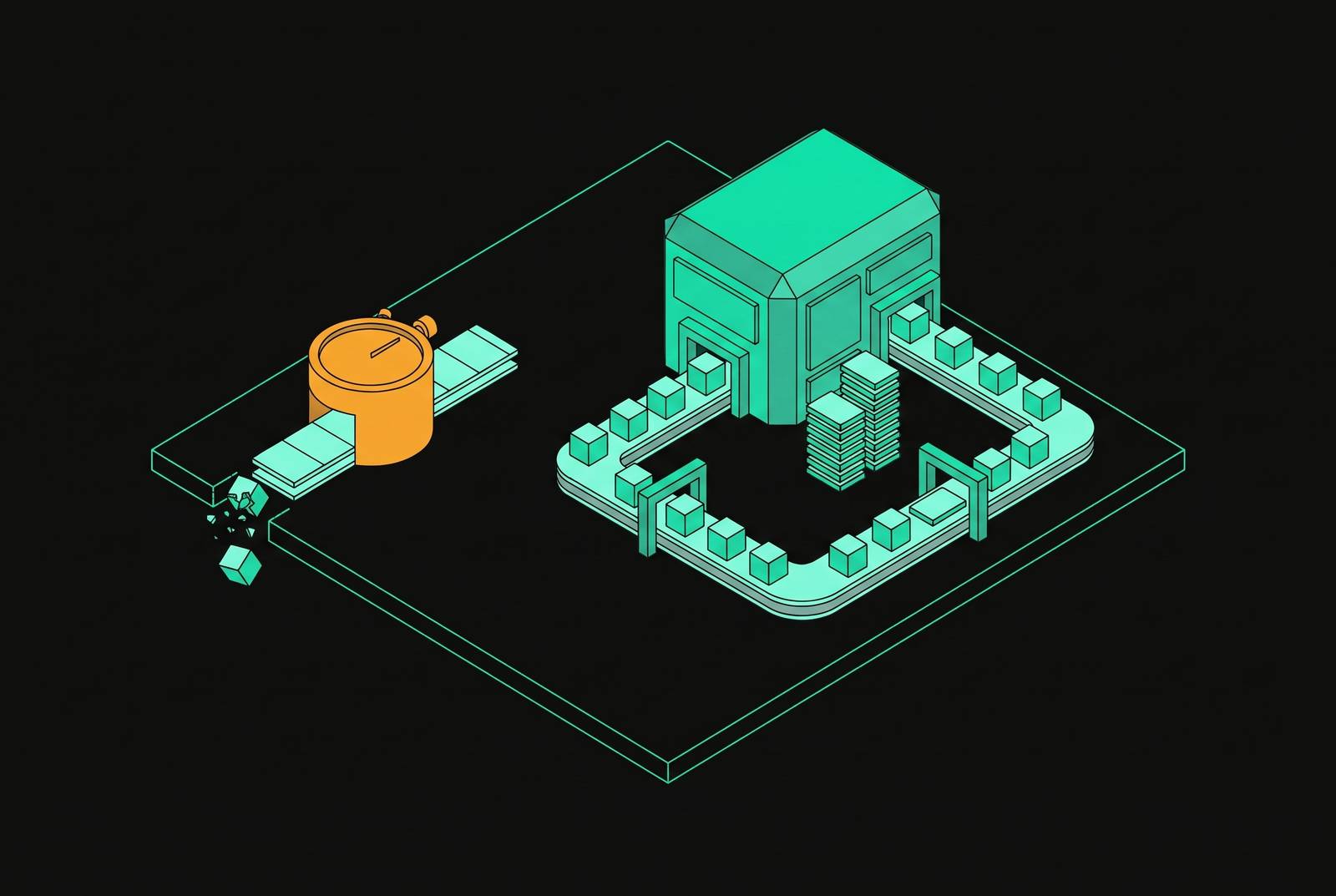
Long-running agent tasks need persistent AI agent infrastructure. A timeout limits how long a worker may run, but it does not preserve session state, checkpoint progress, or recover interrupted work. The right process layer owns those responsibilities so that the agent can outlive any single execution window.
Why a timeout is a bet, not a guarantee
Most agent frameworks start with a request-in, response-out model. A request comes in, some work happens, and a response goes back before the window closes. Production agents break that assumption because execution time is not a known quantity. A task may wait on tools, hit an API rate limit, or need another round of reasoning before it can go on. The window does not control those events.
Long runs also expose the agent to more opportunities for failure. Network timeouts, server restarts, context-window exhaustion, and infrastructure hiccups can interrupt work even when the model makes sound decisions. Those failures can still happen with a longer timeout. Infrastructure shaped around a 30-second HTTP handler therefore has a structural mismatch with a task that runs for hours. The limit may stop the worker, but it provides no plan for what happens next.
What "long-running" actually means — and why the three types demand different engineering
Osmani’s taxonomy separates three problems that often get bundled together. Long-horizon reasoning means planning many steps that depend on one another and getting back on track after a wrong turn taken much earlier. Its main obstacle is context rot, where model performance degrades before the hard token limit. Long-running execution instead means hours or days of work, potentially invoking the model thousands of times. Its obstacle is process mortality, where the worker dies and takes unfinished work with it.
Persistent agency adds a different requirement again. An agent’s identity and accumulated memory must survive beyond any one task and carry over into each session. Anthropic’s shift-work analogy describes engineers who arrive one after another with no memory of the shift before theirs. Without a clear record, some ground is lost at every handoff. This article focuses on long-running execution because that is where the harness, the layer driving the agent’s loop, must survive interruptions.
What a process must own that a timeout cannot
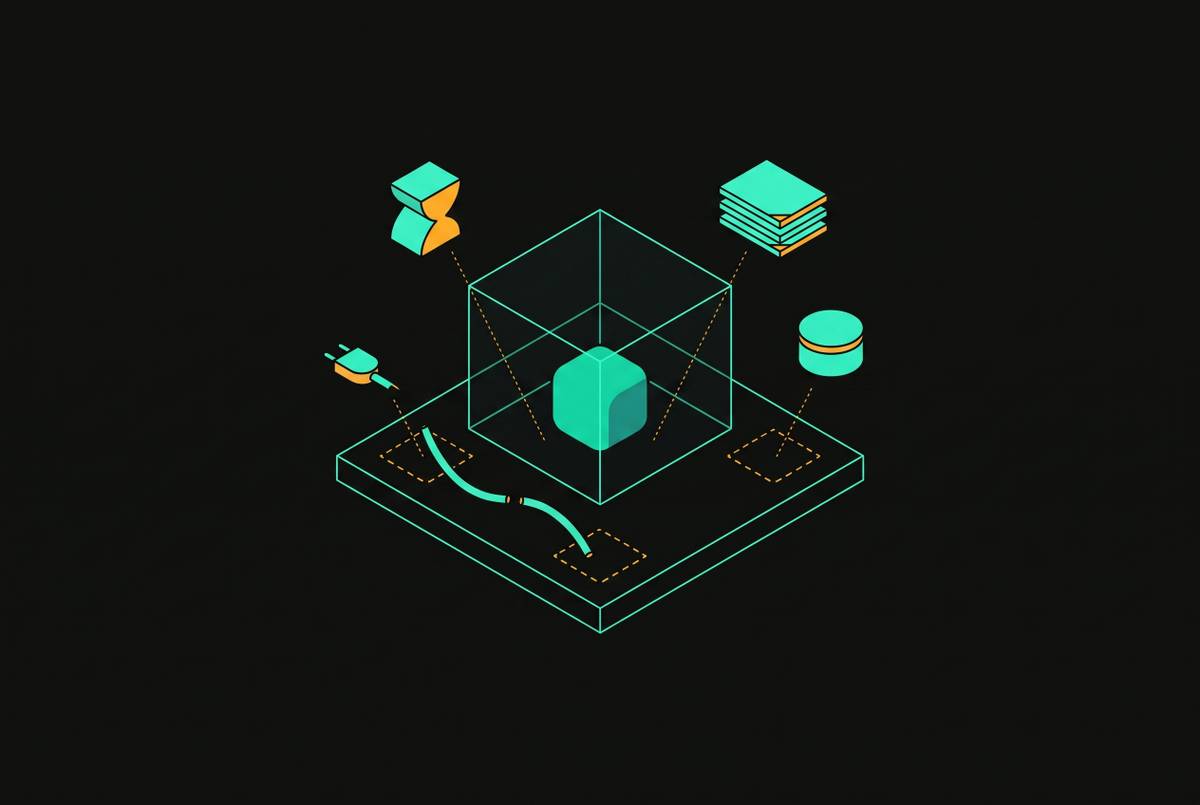
A persistent process is an infrastructure layer. Its in-memory state can be expendable as long as the records needed to continue are durable. Five responsibilities define that layer, namely session, harness, sandbox, checkpoint, and traces. Each has a separate job to do. Combining them inside one worker does not remove the need to preserve them across that worker’s death.
The session is an append-only log of calls, results, and approvals keyed by run ID. After a restart, another worker may continue only if the run’s status, deadline, budget, and owner or lease permit it. The harness drives model and tool turns until completion and must be replaceable across deployments. The sandbox isolates tool execution, especially generated or untrusted code. A checkpoint records committed loop or graph state, while correlated traces let an operator reconstruct what happened after a failure.
Safe continuation requires more than knowing the next step. The process also needs to know whether a side-effecting action already happened, using an operation record with its pending operation ID, arguments, outcome, and external lookup result. That distinction is easy to miss. A checkpoint preserves orchestration progress, but it cannot make an external action safe to repeat. Idempotency keys, deduplication, and reconciliation belong to the process design because replaying a step must not blindly repeat its effects.
Durable execution frameworks and what each one actually guarantees
Temporal uses an ordered event history and deterministic workflow replay, and it runs external work as Activities. Its generally available OpenAI Agents SDK integration runs the agent loop inside a Workflow. This gives general-purpose long-running applications a durable orchestration model. It also imposes specific operating requirements. Workflow code must remain deterministic, versioning needs care, and workers still need disciplined operation.
Microsoft’s Azure Durable Functions documentation describes automatic checkpoints when a function calls an await or yield operator. The Durable Task Framework reconstructs local state by replaying an append-only execution history. Runs can last from seconds to indefinitely. That makes the system a code-first fit for teams using Azure and Microsoft language estates, rather than a way to turn any external action into a guaranteed one-time operation.
Cloudflare Workflows provides durable steps, waits, retries, and external events inside the Workers platform. It also supports pause and resume, restart, termination, and rollback handlers. Those controls have published limits. State-retention windows, per-step state limits, and step-count limits must be accounted for when an agent loop can keep growing.
LangGraph places persistence around the agent’s graph itself. It saves graph-state snapshots at super-step boundaries as well as the task-level pending writes. Its effective guarantee depends on the chosen checkpointer, durability mode, node boundaries, and the idempotency of node side effects. The abstraction is agent-native, but configuration determines recovery behavior. A saved graph does not settle whether an external service already acted.
Across these systems, “exactly once,” “at least once,” and “fault tolerant” have bounded meanings. None is a universal guarantee that an API, browser, payment rail, or database will observe only one attempt. Production safety still needs idempotency, deduplication, reconciliation, compensating actions, and bounded retries where appropriate. Deployment changes create another test. Because a run may outlive several releases, teams should test whether changed workflow code can safely replay or resume old state before committing to a framework.
Why the sandbox is a first-class runtime concern, not an add-on
The sandbox is where tool execution meets a machine. It may hold filesystem artifacts, session state, and in-flight tool results, so its lifecycle affects recovery as well as security. Letting an agent write and run code can be especially risky. If that capability exposes the host, a vulnerability can become a full Remote Code Execution attack. Proper isolation confines malicious execution to the temporary environment.
For untrusted agent code, the engineering direction is toward microVMs rather than relying on Docker/runc shared-kernel isolation. Generated code must be treated as hostile. Yet isolation alone does not make a sandbox durable, and a paused filesystem must not be the only surviving record of a result. The session log and checkpoint are the durable record.
Computer-use agents extend that requirement to a desktop. Microsoft’s UFO³ Galaxy layer coordinates GUI agents across Windows, Linux, Android, and other platforms, while UFO2 uses a picture-in-picture virtual desktop on Windows to avoid taking over the user’s screen. The execution environment therefore includes more than files. It includes the live interface through which the agent is working. A Citrix session that times out mid-workflow can lose transient UI state that a database checkpoint cannot reconstruct. The agent’s process must own the session.
What running agents at scale reveals about process architecture
A Cursor agent swarm that built SQLite from scratch in Rust showed a roughly 8× cost range depending on model selection. The example shows that orchestration affects both cost and reliability because model choices operate inside a system that schedules and sustains the work. At scale, process architecture also sets how much compute sits idle between steps that do work.
RL and evaluation pipelines expose this problem clearly. A single job may ask for thousands of sandbox instances at once, so the platform needs safe resource overcommit and must manage their lifecycles at node scale. SCALECUA collected multiple rollouts per task using hundreds of parallel VM environments. The platform must manage all those environments as well as keep individual workers alive longer.
Google’s Agent Compute Engine gives each agent session its own microVM, checkpoints it while the model thinks, and clones environments copy-on-write from warm snapshots. Each environment has no network card. For bursty swarms, the corresponding process shape is a microVM per environment, billed per second, sleeping when idle, and waking in about a second. Per-user agents need the same economic discipline because a dedicated compute slice for every user becomes expensive if waiting consumes resources.
What the process layer must provide in regulated industries
Healthcare, lending, and insurance require access control, auditability, and human oversight when recovering interrupted work. HIPAA applies to covered entities and business associates that access, use, or disclose protected health information, as well as agents that act on their behalf. Its minimum-necessary standard is codified at 45 CFR 164.502(b). They must limit access, log PHI access events, and arrange business associate agreements with vendors that handle PHI. A longer timeout supplies none of those controls.
Retrieval makes the access boundary especially important. A clinical record-retrieval agent brings PHI into the model’s context when it retrieves records, so the process must limit what the model sees to what the task needs. Access must be controlled at each step. A handler that surfaces everything available cannot substitute for that control. The process needs an observable record of how the task used its authority.
BAA availability is also a procurement constraint. The October 30, 2026 vendor reference includes UiPath, Microsoft Power Automate, Microsoft Copilot Studio, Voiceflow on Enterprise, Lindy on Enterprise, Keragon on all paid plans, Google Cloud’s agent platform, and AWS Bedrock AgentCore. Plan restrictions belong in that comparison. BAA availability does not, by itself, establish that a particular agent workflow meets every obligation.
Legacy software can make these controls harder to implement. Where Citrix-hosted EHRs, document systems, or loan origination systems have no published API, agents may operate the GUI and log in like staff. A timed-out Citrix session then loses transient UI state within a regulated workflow. The process must own the session, hold credentials, and support resuming GUI state. Human takeover also requires a live, viewable, interactable desktop rather than a black-box job that cannot be inspected or interrupted.
Choosing the right process shape for the task
The practical decision starts with the state the task must preserve and the failures it must survive. For most background runs, the recommended starting point is a queue-and-worker design with a PostgreSQL checkpointer. It is simple, inspectable, and replaceable. A workflow engine such as Temporal helps when a task must wait for approval or needs complex replay semantics.
Sandbox requirements follow from what the agent does. Untrusted code, GUI operation, or filesystem state between steps requires a separate sandbox as part of the session. When thousands of parallel tasks run in short bursts, microVMs with copy-on-write snapshots, per-second billing, and idle suspension are a good fit for the batch. Persistent agents that wake, act, and sleep need the cost savings that come from snapshot-and-resume. The target is to eliminate repeated cold restarts, incur no compute cost while asleep, and resume in about a second.
Session logs, approval records, PHI access events, and human takeover must shape the architecture from the start. These are not finishing touches on a timeout-based handler. The persistent process model is the right choice when correctness depends on state and authority surviving the worker that currently holds them. The worker may stop, but the task must still have an owner.